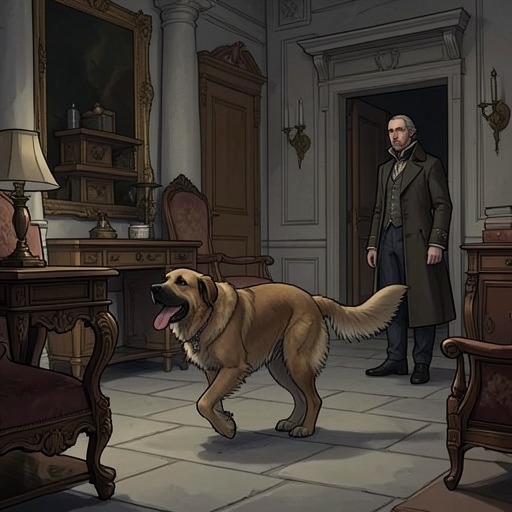
Thomas Wyatt
Wolf HallThomas Wyatt is a court poet whose unresolved attachment to Anne Boleyn draws him into the political and personal consequences of Henry VIII’s pursuit of her. His history with Anne is never reduced to a settled account: rumor, selective confession, and Cromwell’s cautious judgment coexist. After Wyatt asks Cromwell to act as a father to him, the poet’s private distress becomes a recurring subject of their conversations, and his position at court reveals how desire and reputation can become instruments of power.
Identity and Background
Wyatt is a courtier and poet who has spent time abroad, including in Italy and Calais. His return and departure are shaped, in part, by his involvement with Anne. At one supper, Cromwell tells Antonio Bonvisi that Wyatt left England in haste; Bonvisi attributes the journey not to diplomacy but to Wyatt’s inability to remain near Anne. He describes Wyatt as tall, blond, assured, and a poet admired by Italian observers, while Cromwell doubts that mere beauty could offer Anne what she most needs: a husband, a name, and an establishment from which to negotiate with the king.
Wyatt’s poetic reputation gives emotional pain a public form. Cromwell imagines that Wyatt can make verse from romantic deprivation, but the consolation is incomplete. Wyatt later says that Henry’s song “Pastime With Good Company” awakens in him something that wants to howl. Poetry is both his distinction and a way of registering a hurt that he cannot simply put behind him.
Anne Boleyn and the Unsettled Past
Before Wyatt speaks directly about their history, Cromwell hears servants’ gossip that Wyatt had been Anne’s lover in Kent. The musician Mark’s account is explicitly treated as hearsay, not proof; Cromwell wants particulars but finds none. Later, Bonvisi calls the connection an old story, and Cromwell explains that Mark’s claim has circulated among servants and across Europe. The distinction matters: Wyatt’s association with Anne is politically consequential even though the novel does not offer independent confirmation of every rumor.
Cromwell’s own assessment is that Anne has needed marriage more than romance: she requires a title, household, and position from which she can deal with Henry. In his view, Wyatt, already married, could not provide those things. Bonvisi, by contrast, believes that Anne tormented Wyatt and that he fled because he could no longer bear to be near her. The competing interpretations turn Wyatt’s absence into an unresolved question of motive rather than a simple diplomatic episode.
When Wyatt explains himself to Cromwell, he says he was sick at the thought of another man touching Anne, but that he had little to offer: he was married, and neither a duke nor a prince. He recalls Anne allowing him to kiss her and then refusing him, a pattern he describes as alternating consent and refusal. He also says she hinted that she accepted other men, without naming them, leaving him to wonder continually who those men might be and why he had fallen short. His account presents the relationship as an entanglement of attraction, uncertainty, and humiliation, not as a verified catalogue of lovers.
Cromwell as Adviser and Substitute Father
Cromwell’s concern for Wyatt becomes explicit after Sir Henry Wyatt asks him to keep an eye on his son and be a father to him. Sir Henry regrets having arranged Tom’s marriage when he was seventeen, chiefly to preserve his own standing among his Kentish neighbors. He describes his son as brave but troubled by a marriage he did not want, financial disorder, and imprudent choices. Cromwell accepts the charge, although he recognizes the awkwardness of becoming a father to a grown man.
Wyatt soon tests that new relationship. On New Year’s Day, Gregory wakes Cromwell to report that Wyatt has been detained with other young courtiers after a street riot. Cromwell goes to help secure their release, bringing money and treating the episode as one of the practical obligations of his promise. Wyatt later comes to apologize for getting him out of bed. As he wanders through Cromwell’s rooms, looks at himself in a mirror, and worries aloud about his hair and age, Cromwell tries to take his role seriously rather than mock him.
The more difficult counsel concerns Anne. Cromwell asks whether Wyatt’s father ever warned him away from women in whom the king is interested. Wyatt answers that he did stay away, going to Italy and then spending a year in Calais, and asks how far a man can be expected to go. Cromwell recognizes the question from his own experience. He listens, offers wine, and allows Wyatt to speak once, privately, while also warning him that the court is full of spies. Their exchange makes the surrogate bond a form of political as well as personal care: Cromwell wants Wyatt to understand the danger around him without pretending that withdrawal has cured his feelings.
Court Politics and Wyatt’s Place
Wyatt’s attachment is not merely private because Anne’s place in the succession is under negotiation. Cromwell tells Bonvisi that Anne needs a marriage and a household, while later warning Wyatt that he is a married man and cannot offer the position she seeks. Wyatt, in turn, describes Anne’s repeated encouragement and refusal as a pattern that kept him emotionally bound to her. Neither account makes her private intentions fully knowable, but both show how courtship is constrained by rank, marriage, and the king’s designs.
The question of Wyatt’s past also enters political conversation through Charles Brandon. Hearing that Wyatt may be returning from Calais, Brandon wonders whether he should tell Henry what he has heard. Cromwell advises him to leave it alone. The advice recognizes the potential consequences of turning rumor into an accusation: Brandon is already uneasy about the queen’s position and the precedence of Norfolk’s niece over his wife, and Wyatt’s supposed history with Anne could further unsettle an already fraught court.
Wyatt is later among the young men detained after the New Year’s disturbance, alongside Francis Weston and Francis Bryan. The episode does not make him a political conspirator; it shows him in the vulnerable, disorderly company of courtiers whose debts and behavior require Cromwell’s intervention. When Anne is secretly married to Henry in a Whitehall chapel on January 25, 1533, Wyatt is not identified as one of the witnesses. His place in the story remains that of a court insider whose history with Anne casts a shadow over the king’s new marriage without displacing its political reality.
Attachment, Advice, and an Uncertain Future
Wyatt’s distress persists after he says he will spend the summer in Kent reading, writing, and hunting. As autumn advances, Anne draws him back to court. He tells Cromwell that she haunts his solitary nights and asks to be sent back to Italy, where he might be useful rather than unhappy. Cromwell challenges his self-pity and tells him to water his wine; he does not promise an immediate escape, but says Wyatt can be sent abroad when the king needs an ambassador.
That exchange keeps the relationship between the men practical as well as intimate. Cromwell can imagine a diplomatic appointment for Wyatt, and elsewhere considers how his poetic and courtly connections fit into political service. Yet no assignment in the evidence resolves Wyatt’s attachment. His requests for distance recur even as he returns to Anne’s orbit, and Cromwell’s role remains that of a guardian who can offer counsel and a possible route away but cannot settle the meaning of Wyatt’s past or make him indifferent to Anne. The character’s significance lies in that unresolved tension: poetry gives his suffering expression, while court politics keeps the source of it close at hand.